
 Pin It
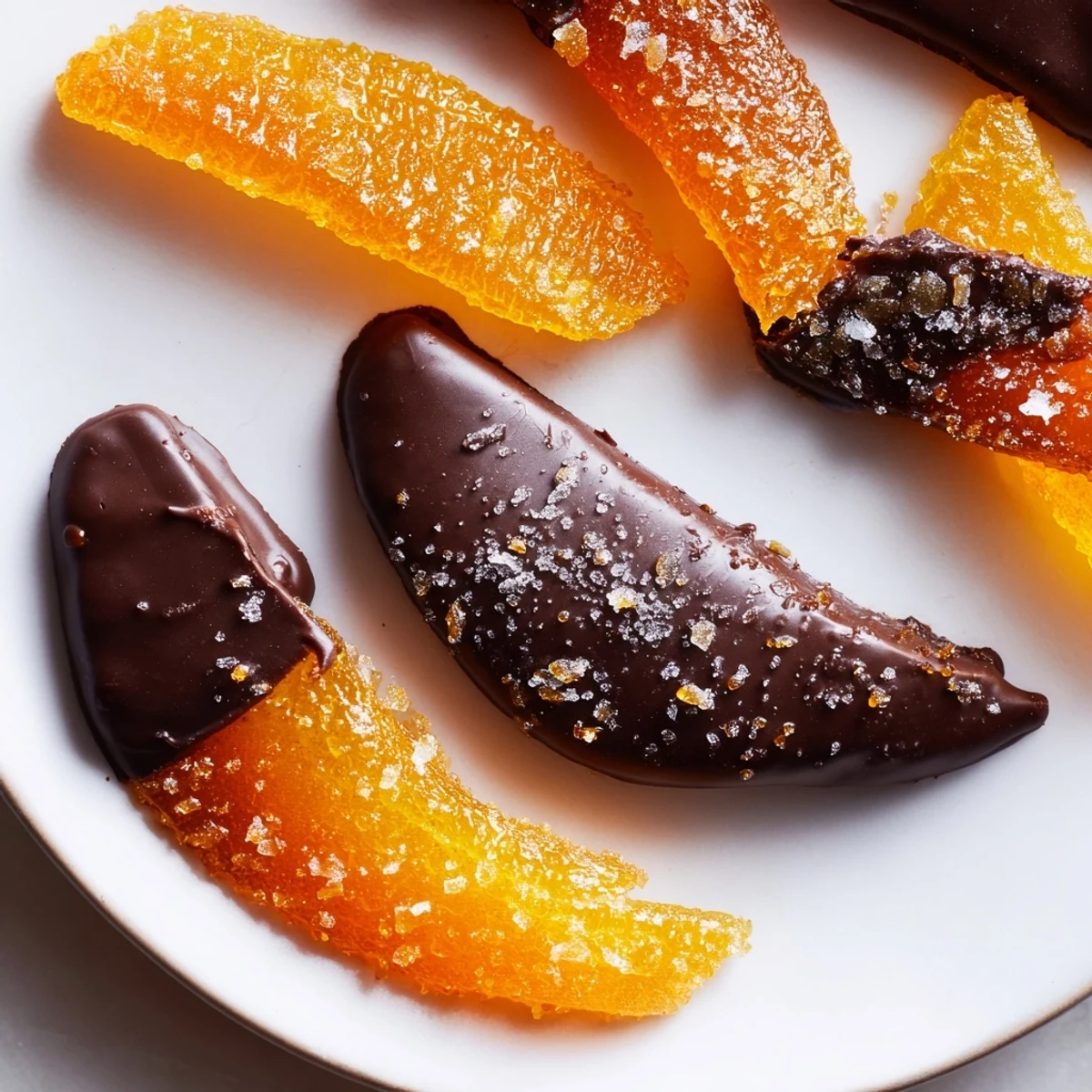
 These chocolate covered orange peels transform simple citrus into an elegant confection. Fresh orange peels are blanched to remove bitterness, then slowly simmered in sugar syrup until translucent and tender.
Once dried, each candied strip is dipped halfway into melted dark chocolate and finished with a touch of flaky sea salt. The result is a perfect balance of bright citrus flavor and deep, rich chocolate.
They make wonderful homemade gifts and keep for up to two weeks stored in an airtight container.
The smell of oranges simmering in sugar syrup on a cold Sunday afternoon is enough to make anyone forget whatever else they had planned. I started making these chocolate dipped orange peels on a whim, armed with leftover citrus and a half eaten bar of dark chocolate, and they have since become the one homemade gift people actually ask me to repeat. There is something deeply satisfying about transforming what most people toss straight into the compost into something jewel toned and irresistible. There is no rushing it, and honestly, that is half the pleasure.
I brought a tin of these to a holiday party once and they vanished before the cheese board did, which is saying something. A friend pulled me aside and asked if I had secretly ordered them from a Parisian chocolate shop, and I had to admit they were just orange peels from my morning juice. That moment of disbelief is exactly the reaction worth chasing.
Ingredients
- 3 large oranges: Use thick skinned navel or Valencia oranges for the most substantial peels, and organic if you can find them since you are eating the rind.
- 1 cup (200 g) granulated sugar: Plain white sugar creates the clearest, brightest syrup and lets the orange flavor come through without distraction.
- 1 cup (240 ml) water: Combined with the sugar to form the candying syrup that penetrates and preserves the peels.
- 200 g high quality dark chocolate (at least 60% cocoa): Splurge on good chocolate here because it is half the candy, and anything below 60% will taste cloying against the sweetness of the peel.
- 1 tsp flaky sea salt (optional): Just a whisper of salt on top of the chocolate elevates everything and balances the sweetness in a way that keeps you reaching for another piece.
Instructions
- Prep the oranges:
- Wash the oranges thoroughly under warm water, scrubbing gently to remove any wax residue. Score the peel from top to bottom in quarters with a sharp knife and gently peel each section away, keeping a thin layer of white pith attached since it helps the strips hold together during cooking.
- Cut into strips:
- Slice the peels into uniform strips about half a centimeter wide so they candy evenly and look tidy once dipped in chocolate. Try to keep them roughly the same size and thickness for consistent results.
- Blanch the bitterness away:
- Place the strips in a saucepan, cover with cold water, bring to a rolling boil for two minutes, then drain completely. Repeat this process two more times because each round pulls out more of the harsh bitter compounds from the pith and leaves behind pure citrus sweetness.
- Make the syrup:
- In the same saucepan, combine the sugar and water and bring it to a gentle simmer, stirring until every last grain dissolves and the liquid turns perfectly clear.
- Candy the peels:
- Add the blanched peels to the shimmering syrup and let them simmer gently for about forty minutes, stirring occasionally so nothing sticks. You will know they are ready when the peels look glossy and slightly translucent, like tiny stained glass windows.
- Dry the strips:
- Lift the peels out with tongs and arrange them on a wire rack set over parchment paper so air can circulate underneath. Let them dry for at least an hour until the surface is no longer sticky to the touch.
- Melt the chocolate:
- Set a heatproof bowl over a saucepan of barely simmering water, making sure the bottom does not touch the water, and stir the chocolate until it melts into a glossy pool. Alternatively, use the microwave in twenty second bursts, stirring between each one to avoid scorching.
- Dip and finish:
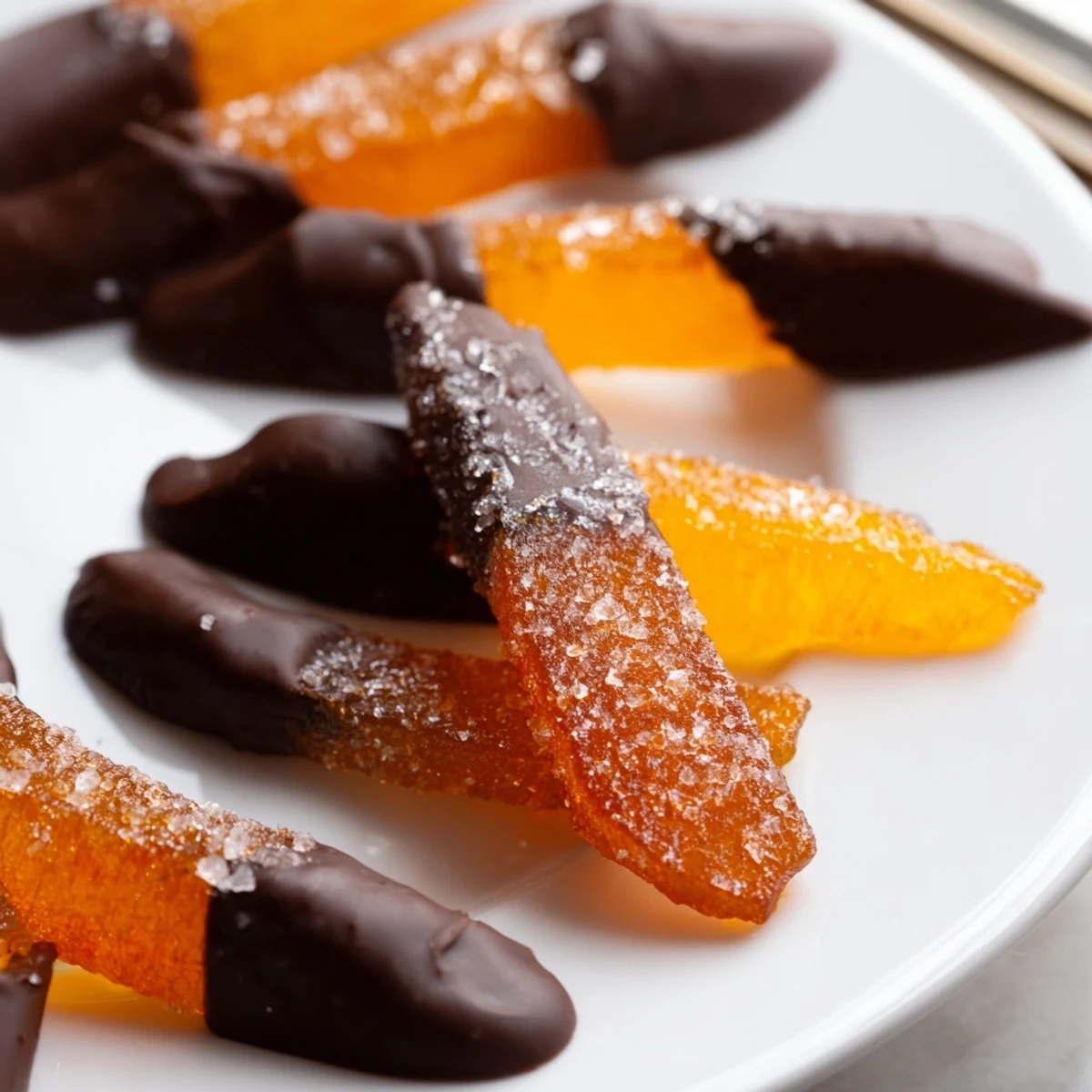
- Dip each candied strip halfway into the warm chocolate, letting the excess drip off gently before placing it on fresh parchment paper. Sprinkle with flaky sea salt right away while the chocolate is still wet, then let everything set at room temperature for about thirty minutes until the coating firms up with a satisfying snap.
 Pin It
 My neighbor stopped by one afternoon while a batch was cooling on the counter and ended up sitting at the kitchen table eating peels and telling me stories about her grandmother making something similar in Portugal. Food has a funny way of opening doors that small talk never touches.
Choosing the Right Chocolate
The chocolate you pick really does make or break this recipe, so taste it before you melt it. If it is something you would happily eat on its own, it will be lovely here, but if it tastes flat or waxy, that quality will only be more obvious against the bright orange flavor. I usually reach for something in the 70 percent range because the extra bitterness creates a beautiful tension with the candied peel.
Storage and Gifting
These keep beautifully in an airtight container at room temperature for up to two weeks, though in my house they rarely last that long. Layer them between sheets of parchment paper so the chocolate does not smudge. A small tin lined with waxed paper and tied with kitchen twine makes an effortless and genuinely appreciated homemade gift.
Variations Worth Trying
Once you master the basic technique, the citrus world is yours to play with and each variety brings its own personality. Grapefruit peels turn slightly more bitter and sophisticated, lemon peels are brighter and more delicate, and a mix of all three looks stunning in a gift box. The candying process is exactly the same for each.
- A strip of Meyer lemon peel dipped in white chocolate is a sunny, mellow twist worth trying when Meyer season arrives.
- Add a tiny pinch of chili powder to the chocolate before dipping for a subtle warmth that builds with each piece.
- Always taste a small piece of candied peel before dipping to make sure the sweetness level is where you want it.
 Pin It
 There is a quiet kind of joy in making something beautiful from what would have been thrown away. These little glistening strips of orange and chocolate remind me that the best recipes are often the ones that slow you down and make you pay attention.
Common Questions
- → Do I need to remove the white pith from the orange peels?
-
You should keep some of the white pith, as it adds a pleasant chewy texture. The blanching process reduces most of the bitterness. Just avoid excessively thick layers of pith for the best balance of flavor and texture.
- → Why do I need to blanch the peels three times?
-
Repeated blanching draws out the bitter compounds from the orange peels. Each boiling cycle softens the peels further and mellows the flavor, resulting in a sweeter, more pleasant candied peel.
- → Can I use milk or white chocolate instead of dark?
-
Yes, you can use milk or white chocolate for dipping. However, dark chocolate provides the best contrast to the sweet candied peels. Choose chocolate with at least 60% cocoa for the richest flavor.
- → How do I know when the peels are done candying?
-
The peels are ready when they become translucent and look slightly glossy. This typically takes about 40 minutes of gentle simmering. They should feel soft and pliable, not tough or rubbery.
- → What is the best way to melt the chocolate?
-
A double boiler is the most reliable method. Place a heatproof bowl over simmering water, making sure the bowl doesn't touch the water. Stir gently until smooth. Alternatively, microwave in 20-second bursts, stirring between each interval.
- → How should I store the finished chocolate orange peels?
-
Store them in an airtight container at cool room temperature for up to two weeks. Avoid refrigerating them, as condensation can cause the chocolate to bloom and lose its glossy finish.
- → Can I use other types of citrus?
-
Absolutely. Grapefruit, lemon, and tangerine peels all work beautifully with this same method. Each citrus variety brings its own unique flavor profile to the finished treat.
