
 Pin It
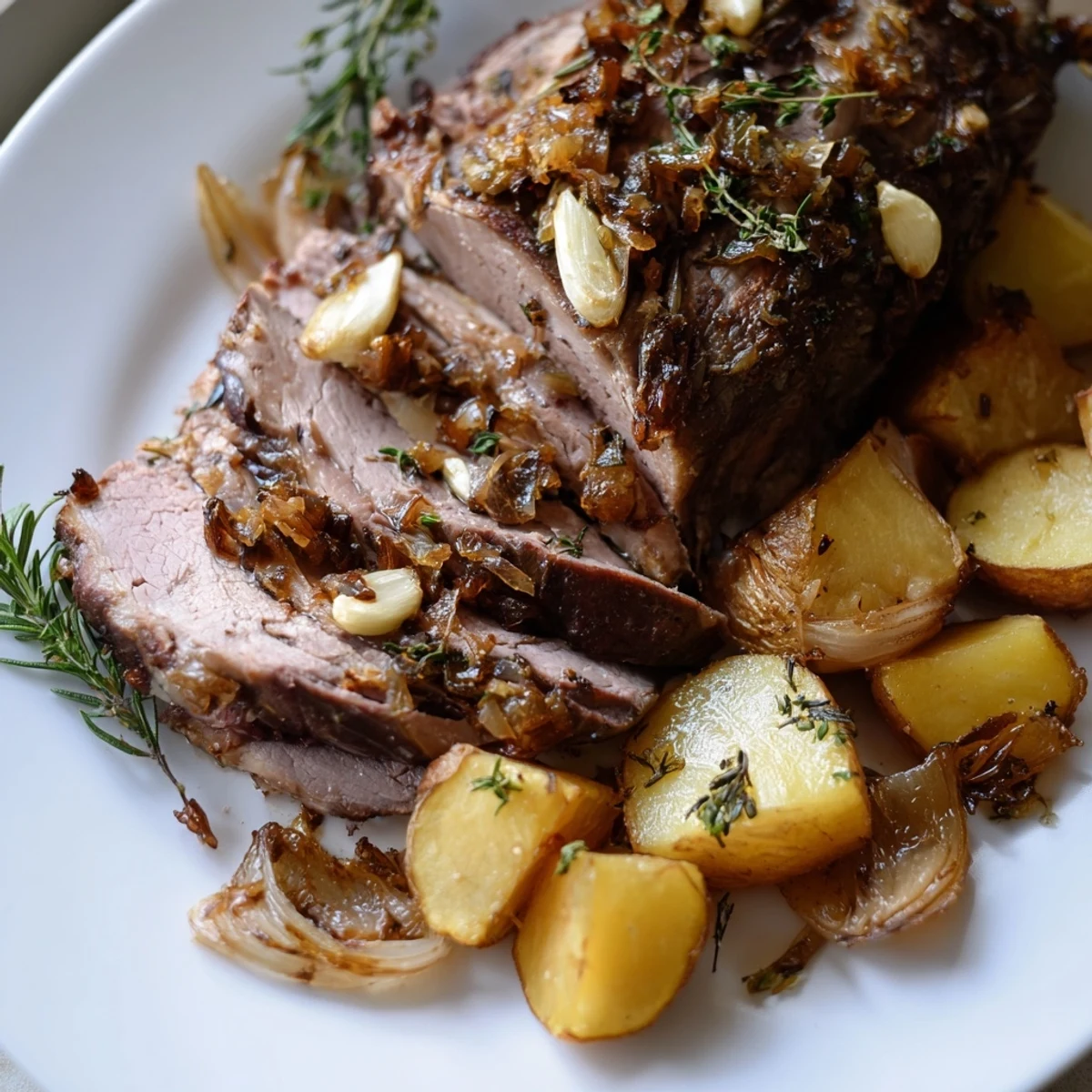
 This dish highlights a tender leg of lamb carefully seasoned with garlic, rosemary, and thyme, roasted to juicy perfection. Potatoes and onions roast alongside in olive oil and broth, absorbing rich flavors. The slow roasting method ensures succulent meat with a crispy, golden potato side. Resting before carving locks in juices for a succulent bite. Ideal for gatherings or special dinners, it combines classic herbs with comforting textures to delight the palate.
The first time I attempted a leg of lamb, I was hosting Easter dinner for my in-laws. My hands were shaking as I made those tiny slits for the garlic, wondering if I was cutting too deep or too shallow. When that incredible aroma started wafting through the house an hour later, I knew something magical was happening in my oven.
Last spring, my neighbor Sarah came over halfway through the roasting time and stood in my kitchen just breathing deeply. She ended up staying for dinner and brought the wine, claiming she could smell the rosemary from two houses away. That is the power of a really good roast.
Ingredients
- Leg of lamb: Bone-in adds incredible flavor and helps keep the meat moist during roasting, plus it makes for a beautiful presentation
- Yukon Gold potatoes: These hold their shape beautifully while getting creamy inside and crispy outside, unlike russets which can fall apart
- Fresh rosemary and thyme: Fresh herbs make a huge difference here, they bloom in the heat and release oils that dried herbs simply cannot match
- Garlic slices: Tucking these into small incisions distributes flavor throughout the meat instead of just on the surface
- White wine and broth: This creates a steamy environment that keeps the lamb from drying out while forming the base for those incredible pan juices
Instructions
- Preheat and prep the lamb:
- Get your oven to 200°C (400°F) and pat that leg of lamb completely dry with paper towels. Using a sharp knife, make small slits all over the meat and tuck garlic slices into each one, like little flavor pockets waiting to be discovered.
- Season generously:
- Rub the lamb with 2 tablespoons olive oil, then press the rosemary, thyme, salt, and pepper all over it. Really massage those herbs in so they stick to the meat.
- Arrange in the pan:
- Place the lamb in a large roasting pan and scatter the potato chunks and onion quarters around it. Drizzle the remaining olive oil over the vegetables, toss to coat, and sprinkle with a pinch more salt and pepper.
- Add the liquids and roast:
- Pour the wine and broth into the bottom of the pan, being careful not to wash the seasonings off the lamb. Roast at 200°C (400°F) for 30 minutes, then reduce to 180°C (350°F) for another 60 minutes, basting every 20 minutes with those pan juices.
- Check for doneness:
- Insert a meat thermometer into the thickest part. You want 57°C (135°F) for medium-rare or 63°C (145°F) for medium, keeping in mind the temperature will rise while resting.
- Rest before carving:
- Let the lamb rest, loosely tented with foil, for at least 15 minutes. This is absolutely crucial, all those juices need time to redistribute or they will run out onto your cutting board.
- Serve and enjoy:
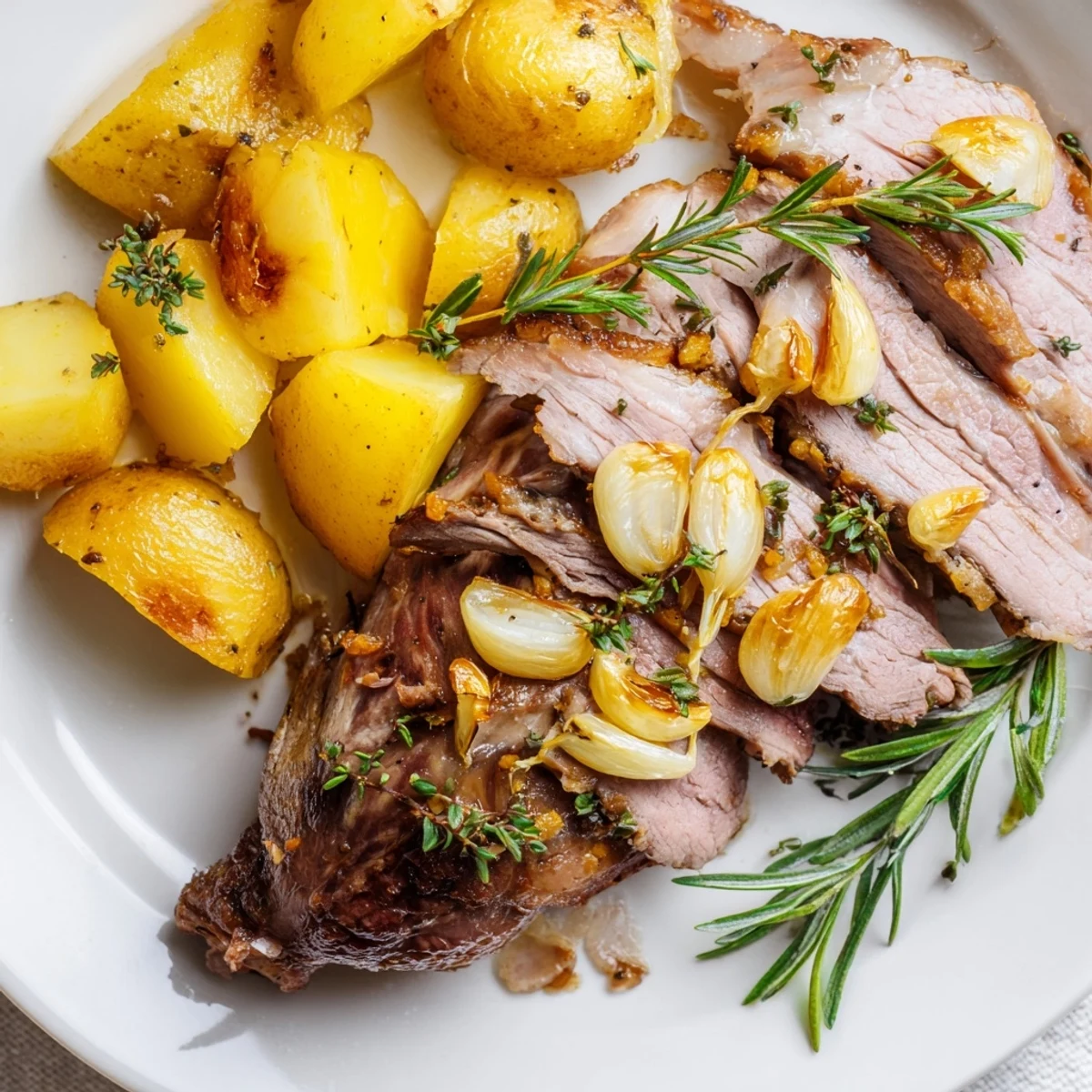
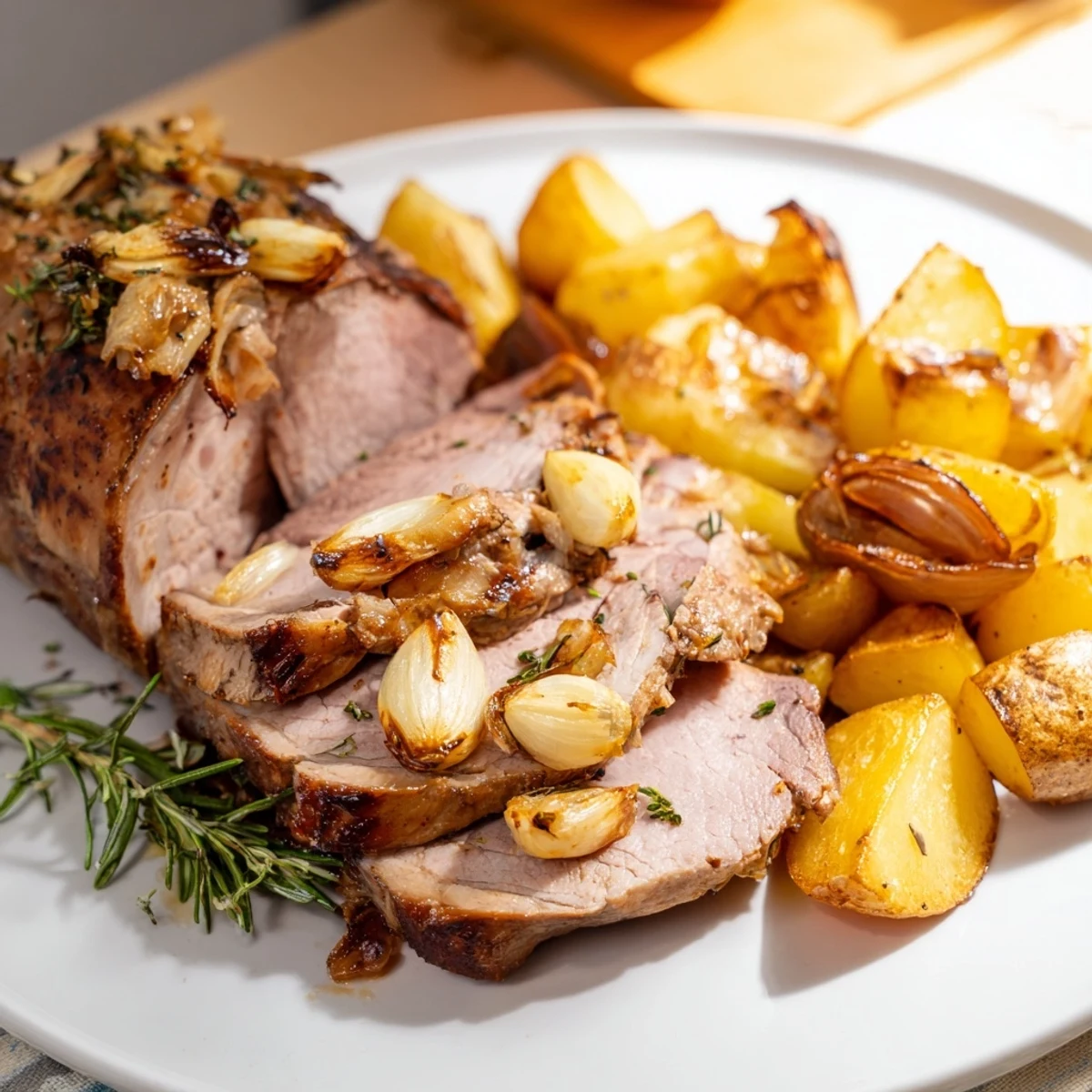
- Carve the lamb against the grain into nice thick slices and serve alongside those golden potatoes. Spoon some of those pan juices over everything.
 Pin It
 My grandmother always said that a roast is about the people gathered around it as much as the food itself. She was right, the best conversations happen while everyone is waiting those long 15 minutes for the meat to rest, glasses of wine in hand, stomachs rumbling in harmony.
Making It Ahead
You can prep the lamb with the garlic slits and herb rub up to a day ahead, keeping it wrapped tight in the refrigerator. The potatoes should be cut and stored in water to prevent browning, but do not add them to the pan until right before roasting.
Choosing the Right Cut
A bone-in leg of lamb will always yield more flavorful and juicy results than boneless. The bone acts as a heat conductor, cooking the meat from the inside out, and it imparts a richness that is impossible to replicate. If you can only find boneless, tie it with kitchen twine to help it hold its shape.
Leftover Love
Leftover lamb makes incredible sandwiches the next day, especially with a bit of horseradish mayo and arugula. The potatoes can be smashed and fried for breakfast or added to a frittata.
- Cold lamb straight from the fridge has a completely different texture, almost like a luxurious cold cut
- Freezing leftover roasted lamb works surprisingly well for up to three months
- The pan juices can be frozen in ice cube trays for instant flavor boosts in future soups or stews
 Pin It
 There is something deeply satisfying about a roast that feels fancy enough for company but simple enough for a Sunday supper. The house smells amazing for hours, and the leftovers are arguably even better than the first meal.
Common Questions
- → How do I ensure the lamb stays tender?
-
Use gentle roasting temperatures and rest the meat after cooking to retain juices for a tender texture.
- → Can I add other vegetables to the potatoes?
-
Yes, carrots and parsnips complement the potatoes well and add extra flavor and color to the dish.
- → What temperature should the lamb reach for medium doneness?
-
Cook until the internal temperature hits about 63°C (145°F) for medium doneness.
- → What herbs pair best with roasted lamb?
-
Fresh rosemary and thyme enhance the lamb's flavor with their earthy and aromatic qualities.
- → Is wine necessary for this preparation?
-
Dry white wine adds acidity and depth, balancing the richness of the lamb and potatoes.
- → How should I prepare the garlic for an intense flavor?
-
Insert thin garlic slices into small cuts made in the lamb to infuse flavor deeply during roasting.
