
 Pin It
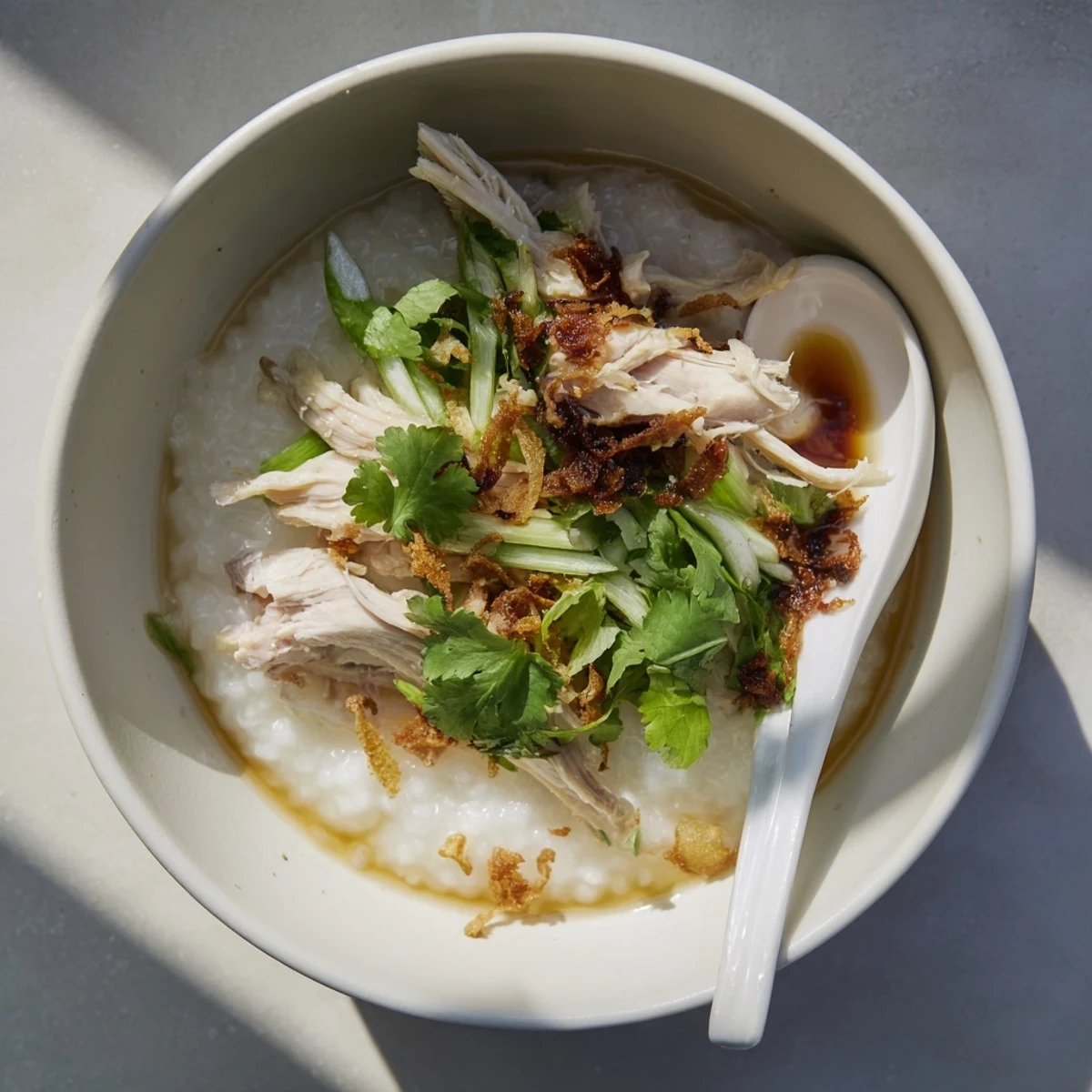
 This traditional Chinese comfort dish transforms simple rice into a creamy, velvety porridge through slow simmering. The rice breaks down completely, absorbing the rich flavors of chicken stock, ginger, and garlic. Tender shredded chicken adds protein, while optional toppings like scallions, soy sauce, and sesame oil create layers of savory flavor. Ready in just over an hour with minimal prep, this warming bowl is perfect for breakfast or any time you need something soothing.
The first time I had congee was on a gray, rainy morning when nothing sounded appealing but something warm and gentle. My grandmother stirred a massive pot on the stove, the rice grains breaking down until the whole kitchen smelled like comfort itself. She taught me that good congee isn't about precision—it's about patience and letting the rice surrender completely to the broth.
Last winter, my partner came down with a terrible flu and nothing seemed to help until I made a massive batch of this congee. We ate it for three days straight, and by day two, I realized this humble porridge was doing more than filling bellies—it was actually making us feel held. Now it's my go-to whenever life feels overwhelming or someone needs tending.
Ingredients
- 2 boneless skinless chicken breasts or thighs: Thighs stay juicier longer in the simmer, but breasts work perfectly if you pull them early
- 1 cup long-grain white rice rinsed: Rinse until water runs clear—this prevents gummy congee and yields the silkiest texture
- 8 cups chicken stock or water: Stock adds depth but water works beautifully if you season well later
- 1 thumb-sized piece fresh ginger peeled and sliced: Don't mince it—slicing lets you easily fish out the pieces before serving
- 2 garlic cloves smashed: Smashing releases more flavor than chopping, and they'll melt into the porridge
- 1 teaspoon salt or to taste: Start light and adjust at the end—flavors concentrate as the rice breaks down
- ½ teaspoon white pepper: White pepper disappears into the creamy background while adding gentle warmth
- 2 scallions thinly sliced: These bring a fresh crunch that cuts through all that richness
- 1 tablespoon soy sauce: Adds umami depth without overpowering the subtle flavors
- 1 tablespoon toasted sesame oil: Drizzle this at the very end for a fragrant, nutty finish
Instructions
- Start the pot:
- Combine rice, chicken, ginger, garlic, and stock in a large pot. Everything goes in raw—no pre-cooking needed.
- Bring to a boil then settle in:
- Turn heat to medium-high until it bubbles, then reduce to a gentle simmer. Skim off any foam that rises to the top for a cleaner taste.
- Let time do the work:
- Simmer uncovered for 45 to 60 minutes, stirring occasionally so nothing sticks to the bottom. The rice should completely break down and the mixture should become creamy and thick.
- Shred the chicken:
- Remove chicken once cooked through, about 20 to 25 minutes in. Shred with two forks and return it to the pot.
- Season and taste:
- Stir in salt and white pepper. Taste and adjust—congee should be seasoned well since it's mostly rice.
- Finish with flourish:
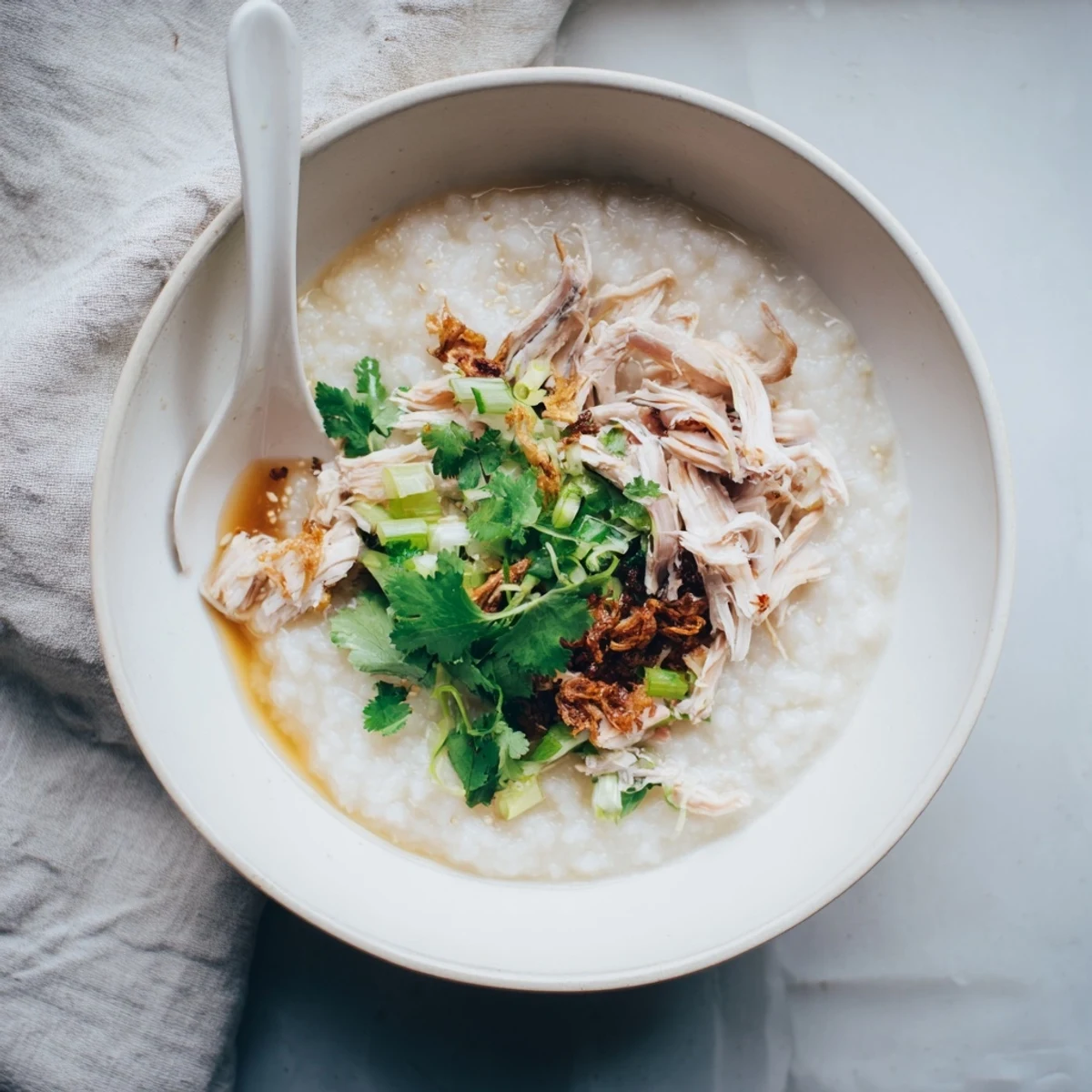
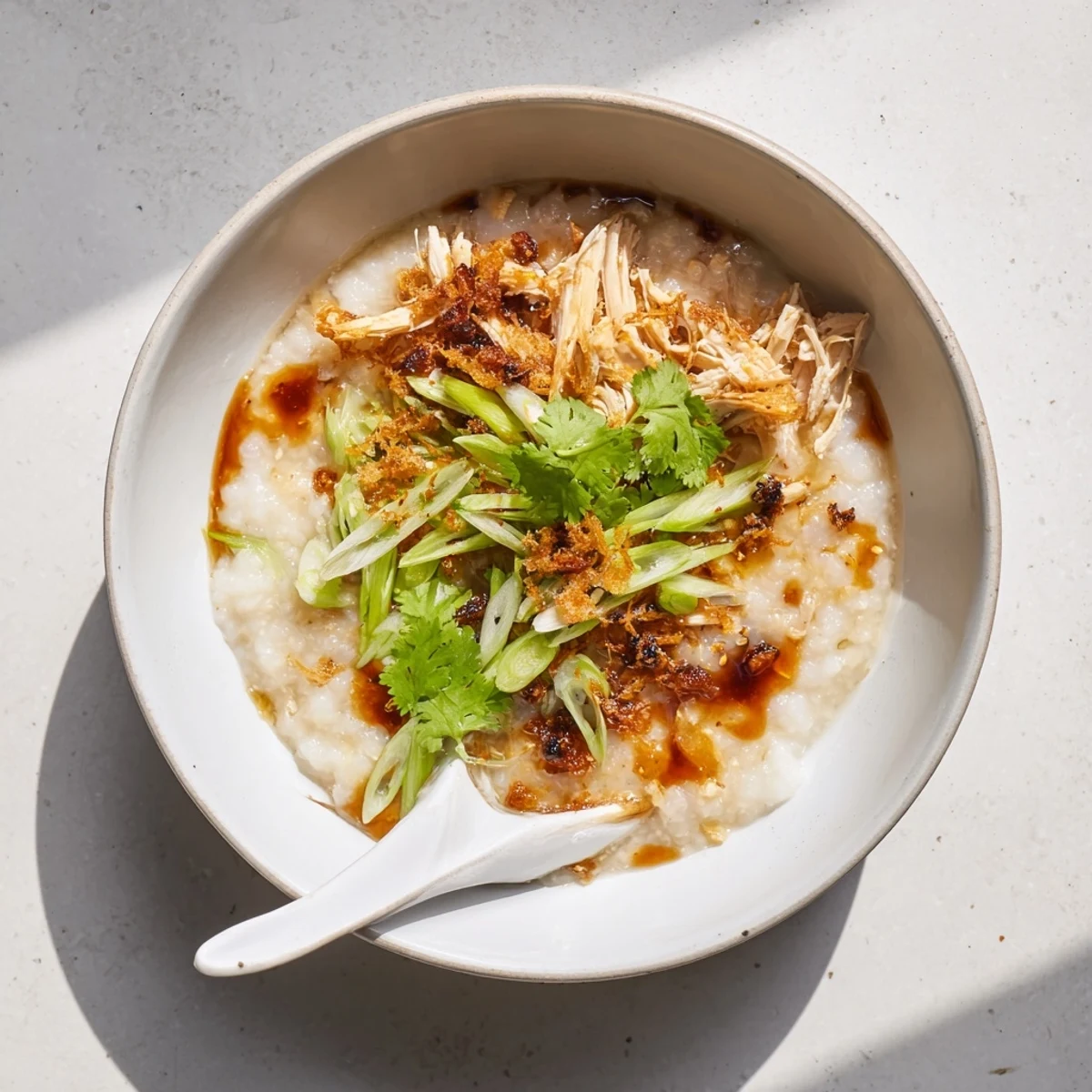
- Serve hot in bowls, topped with scallions, soy sauce, sesame oil, and any other garnishes you love.
 Pin It
 My friend Sarah once told me that congee cured her homesickness when she moved across the country, and I finally understood what she meant. Food that simple does something profound—it reminds you that comfort doesn't have to be complicated.
Make It Your Own
I've made this with leftover rotisserie chicken in a pinch, and while the texture changes slightly, the comfort remains. You can also swap white rice for brown rice, though you'll need to extend cooking time and add more liquid as brown rice is thirstier.
Topping Magic
The toppings are where congee becomes a meal rather than just porridge. Fried shallots add crunch, century eggs bring creamy complexity, and fresh cilantro brightens everything. Don't skip them—they transform the dish completely.
Serving Suggestions
Traditional Chinese breakfast includes youtiao, or fried dough sticks, for dipping into congee. But honestly, a soft-boiled egg or pickled vegetables work beautifully too.
- Keep warm stock handy for reheating leftovers
- Set up a topping bar so everyone can customize
- Make extra—the flavor improves overnight
 Pin It
 There's something about standing over a simmering pot of congee that feels like a meditation in patience. Maybe that's exactly what we need sometimes.
Common Questions
- → What is the texture of properly made congee?
-
A well-made congee should be creamy and smooth, with the rice grains completely broken down and integrated into the liquid. The consistency should be thicker than soup but pourable, similar to a thick porridge or oatmeal.
- → Can I make this faster?
-
Yes, you can use a pressure cooker or instant pot to reduce cooking time to about 30-40 minutes. Alternatively, soak the rice for a few hours before cooking to help it break down faster.
- → What type of rice works best?
-
Long-grain white rice is traditional, but jasmine rice works excellently too. Avoid short-grain rice as it becomes too sticky. Some cooks prefer a mix of white and glutinous rice for extra creaminess.
- → How do I store and reheat leftovers?
-
Congee stores well in the refrigerator for 3-4 days. It will thicken considerably when cold—simply add water or stock when reheating to reach your desired consistency. Reheat gently on the stove, stirring frequently.
- → What are traditional toppings?
-
Classic toppings include thinly sliced scallions, fried shallots, fresh cilantro, century eggs, and a drizzle of soy sauce and sesame oil. Some regions also add pickled vegetables, peanuts, or fermented tofu.
