
 Pin It
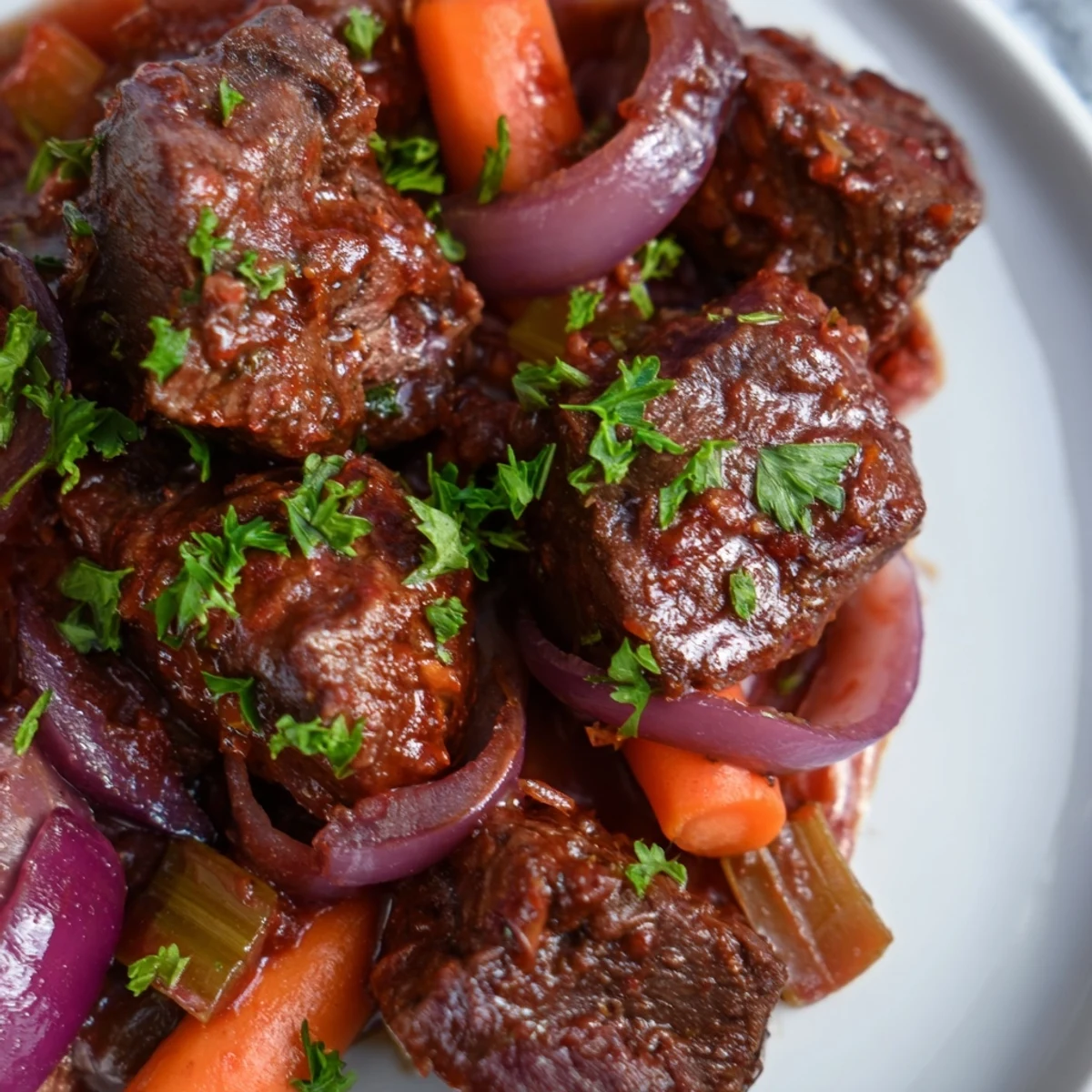
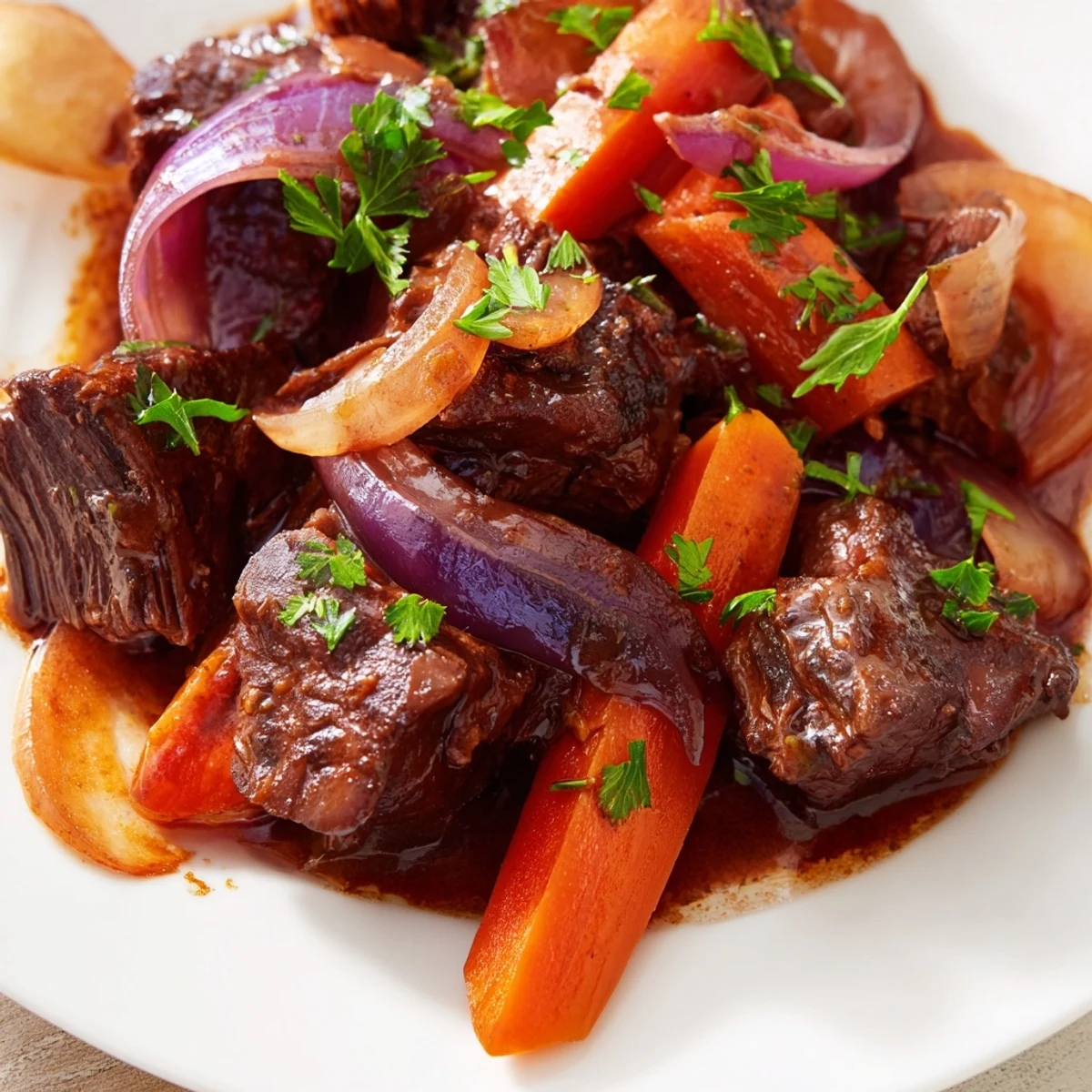
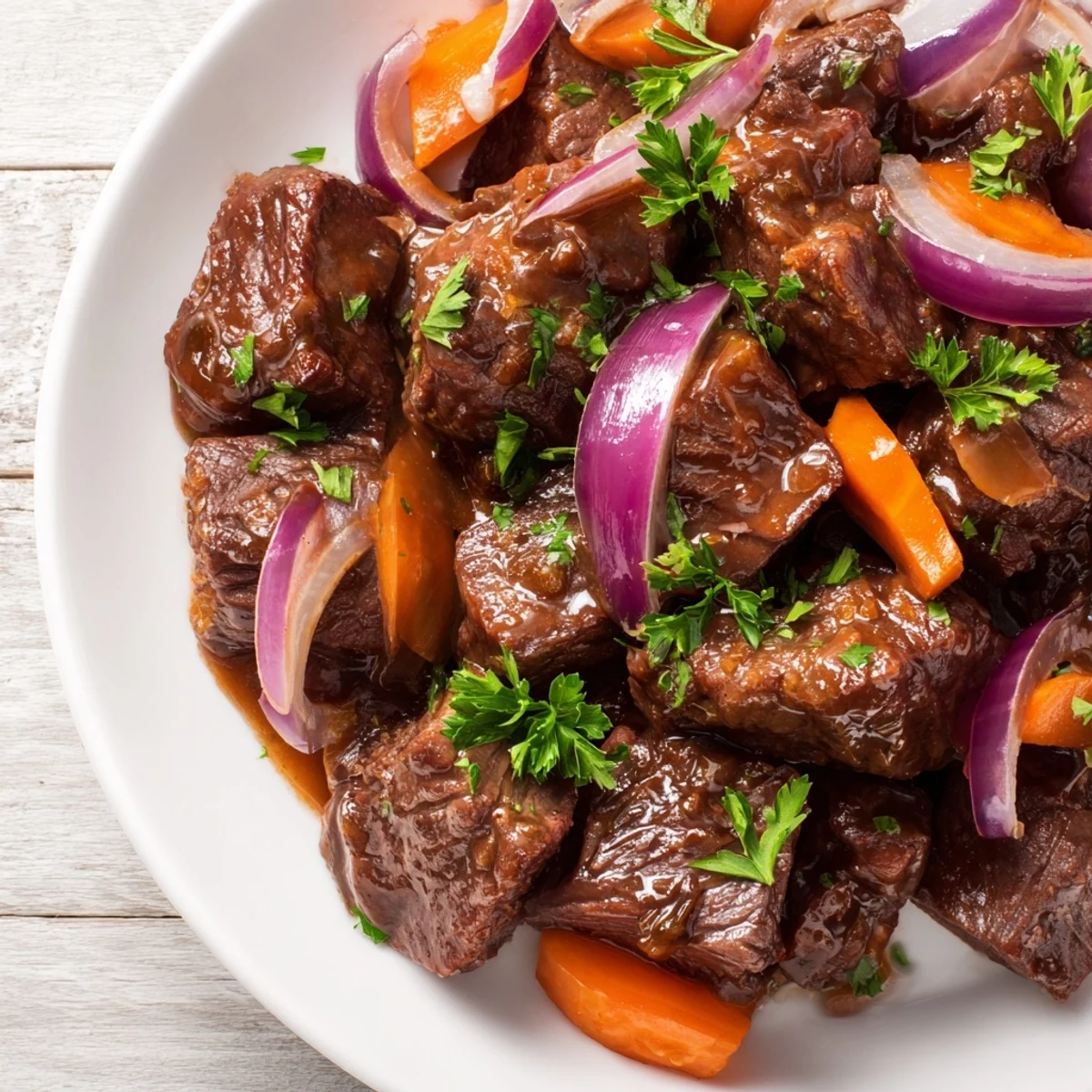
 This dish features tender beef chuck slowly braised alongside sweet red onions, garlic, carrots, and celery. Aromatic herbs like thyme and bay leaves impart depth, while dry red wine and beef stock create a luscious sauce. The beef is first seared for rich flavor, then cooked low and slow until fork-tender. Served hot and garnished with fresh parsley, it's perfect with mashed potatoes or crusty bread.
There's something about the smell of red wine reducing in a hot pot that makes you forget you're cooking on a Tuesday night. I discovered this braised beef chuck years ago when a friend brought it to a winter dinner, and I watched how everyone at the table just went quiet, forks clinking softly as they worked through those impossibly tender chunks of meat. The sauce was deep and glossy, the red onions had practically melted into sweetness, and I realized that some of the best meals aren't about complexity or speed—they're about time and heat and knowing when to stop fussing.
I made this for my partner during the first real cold snap of the year, and I remember the kitchen fogging up with steam as I uncovered the pot. The whole apartment smelled incredible, rich and wine-dark and alive in a way that made us both just stand there for a moment before we even sat down. That's when I knew this would become a regular thing—not because it was fancy, but because it felt like care.
Ingredients
- Beef chuck (1.5 kg / 3.3 lbs, cut into large cubes): This cut is full of connective tissue that breaks down into gelatin during braising, giving you that silky mouthfeel and deep, beefy flavor—don't be tempted to use a leaner cut.
- Red onions (3 large, sliced): Their natural sugars concentrate as they braise, turning almost caramel-like and creating a natural sweetness that balances the wine.
- Garlic (3 cloves, minced): Add it after the vegetables soften so it doesn't burn and turn bitter—that moment when you smell it hit the hot oil is your cue it's working.
- Carrots and celery (2 each, sliced): These build the flavor base, and their subtle sweetness rounds out the acidity from the wine.
- Dry red wine (400 ml / 1 2/3 cups): Use something you'd actually drink; cheap wine tastes cheap even after two hours in the oven.
- Beef stock (500 ml / 2 cups): Homemade is best if you have it, but good quality store-bought works—it's the foundation of your sauce.
- Olive oil (3 tbsp): Essential for getting a proper crust on the beef, which locks in flavor and builds those brown bits that make your sauce taste incredible.
- Tomato paste (2 tbsp): A small amount adds depth and a touch of acidity without making the dish taste tomatoey.
- Bay leaves and fresh thyme (2 bay leaves, 4 sprigs thyme): These herbs infuse the braising liquid with aromatic complexity—remove them before serving or you'll catch someone biting into a tough leaf.
- Salt and black pepper: Taste as you go, especially at the end when flavors concentrate—what seemed right early on might need adjustment.
Instructions
- Get your oven ready:
- Set it to 160°C (325°F) before you do anything else. A preheated oven is the difference between tender meat and tough meat—low, steady heat is the whole point.
- Dry and season the beef:
- Pat those cubes really dry with paper towels; any moisture on the surface keeps them from browning properly. Season generously with salt and pepper, and don't be shy about it.
- Sear the meat in batches:
- Heat olive oil in your Dutch oven until it shimmers, then add beef in a single layer—overcrowding the pot means steam instead of sear. Work in batches if needed, transferring each browned batch to a plate; you're building flavor here with those dark, crusty bits.
- Sauté the vegetables:
- Lower the heat to medium and add your red onions, carrots, and celery to the same pot. Let them cook for 8-10 minutes, stirring occasionally, until the onions start to turn golden and soft; this is when their natural sugars wake up.
- Add garlic and tomato paste:
- Stir these in and cook for just 2 minutes—you want them fragrant and slightly darkened, not burned. The tomato paste should stick to the bottom of the pot slightly, deepening in color.
- Deglaze and combine:
- Pour in the red wine, scraping the bottom with a wooden spoon to lift all those flavorful brown bits. The kitchen will smell insanely good; that's the wine catching all those caramelized flavors.
- Build your braise:
- Return the beef to the pot, add your beef stock, bay leaves, and thyme. Give it a stir, bring everything to a gentle simmer, then cover and slide it into the oven.
- Low and slow braising:
- Braise for 2 to 2.5 hours—the beef is ready when a fork slides through with almost no resistance. Resist the urge to peek constantly; every time you open the oven, you lose heat.
- Finish and season:
- Fish out the bay leaves and thyme sprigs. Taste the sauce and adjust salt and pepper—the flavors will have concentrated, so you might need less than you think.
 Pin It
 The first time someone asked for seconds, I realized this dish had become more than just dinner—it was the kind of thing people remember and ask you to make again. That moment of recognition, when you watch someone truly satisfied, is when cooking stops being about technique and becomes about connection.
What Makes This Braised Beef So Special
There's a particular kind of magic that happens when tough, fibrous meat meets low heat and time. Beef chuck is an underappreciated cut because most people rush it, but braising turns that initial toughness into a feature—the collagen breaks down into gelatin, which is what gives you that luxurious, almost velvety texture. The wine adds acidity that brightens everything, while the slow cooking lets those onions and herbs weave themselves into every bite. It's patient cooking, the kind that rewards you for stepping back and trusting the process.
Pairing and Serving Ideas
Creamy mashed potatoes are the obvious choice, and for good reason—they're a perfect vehicle for that silky sauce. Polenta works beautifully too, especially if you make it rich with butter and Parmesan, and don't overlook crusty bread for soaking up every last bit. I've also served it alongside soft egg noodles tossed with a little butter, which feels more bistro than rustic, but equally delicious.
Variations and Swaps
The foundation of this dish is flexible once you understand how it works. Shallots instead of red onions give you a more delicate sweetness if you prefer subtlety over bold flavors, and white wine works if that's what you have—just expect a slightly brighter, less robust sauce. A knob of butter stirred in at the very end, once the pot is off heat, adds a silky richness that feels almost decadent, and some people swear by a splash of balsamic vinegar for extra depth. Mushrooms, if you add them near the end so they don't dissolve, become tender nuggets that soak up all that wine sauce beautifully.
- Try beef stock made with extra herbs like rosemary for a more Mediterranean lean.
- A splash of port or even brandy can replace some of the red wine for a sweeter note.
- Finish with fresh herbs like parsley or chives scattered across the top for brightness and color contrast.
 Pin It
 This is the kind of dish that transforms an ordinary evening into something warm and nourishing, the kind you'll find yourself making on nights when you need comfort in a bowl. Once you master this technique, you'll realize it's not just about this one dish—it's a foundation for so many variations, so many meals yet to come.
Common Questions
- → What is the best cut of beef for this dish?
-
Beef chuck is ideal due to its marbling and connective tissue, which break down during slow cooking to result in tender, flavorful meat.
- → Can I substitute the red wine with another liquid?
-
Yes, beef stock or a robust grape juice can be used, but red wine adds acidity and depth that enhance the flavor profile.
- → How do I know when the beef is fully cooked?
-
The beef is fork-tender when it easily pulls apart with a fork after the long braising time of 2–2.5 hours.
- → What vegetables are used to enhance the sauce?
-
Sliced red onions, carrots, celery, and garlic create a rich base that caramelizes and melds with the wine and herbs for a deep flavor.
- → Are there suggested side dishes to compliment this main course?
-
Traditional pairings include creamy mashed potatoes, polenta, or crusty bread to soak up the rich sauce.
- → How should I store leftovers?
-
Leftovers should be cooled and refrigerated in an airtight container and consumed within 3–4 days for best quality.
